Seraphael's Heaven DEMO
A downloadable game for Windows
Seraphael’s Heaven is a deliberately old-fashioned action platformer, built in the image of the early Castlevania-style games that prioritized pattern recognition, rigid movement, and persistence over spectacle. It does not attempt to modernize the formula, nor does it pretend to compete with contemporary releases in terms of scale, presentation, or technical ambition. What it offers instead is a focused, linear experience rooted in trial-and-error gameplay, simple combat mechanics, and a story told in broad, dramatic strokes.
Set within a fractured religious order, the game follows four members of a once-unified church: Seraphael, Brother Gregory, Mereth, and Vicar Sereth. Their shared purpose begins to unravel when Seraphael reaches a conclusion that the others cannot accept, that faith alone is not enough. Where the church teaches patience and devotion, Seraphael sees only inaction. He grows convinced that the gods require a singular ruler, a “god-king,” to enforce their will upon the world. In his mind, divine words mean nothing without power behind them.
Believing himself to be the only one worthy of such a role, Seraphael turns against his own order. What follows is not a subtle fall from grace, but a direct and forceful betrayal. He seizes power, reshapes the church into something harsher, and sets his sights beyond it. The world, as he sees it, must be unified, not through persuasion, but through control.
The remaining members do not respond as one. Brother Gregory stands firmly against Seraphael’s vision, taking on the role of the player’s central anchor: a character driven more by duty than ideology. Vicar Sereth represents the last remnant of the old faith, attempting to preserve what little remains of their original purpose. Mereth, however, is less certain. Over time, doubt gives way to agreement, and he ultimately sides with Seraphael, a decision that fractures the group completely and sets the stage for one of the game’s key turning points.
The narrative is not delivered through extensive dialogue or cinematic storytelling. Instead, it unfolds through brief exchanges, environmental context, and boss encounters. The most significant moments are tied directly to gameplay.
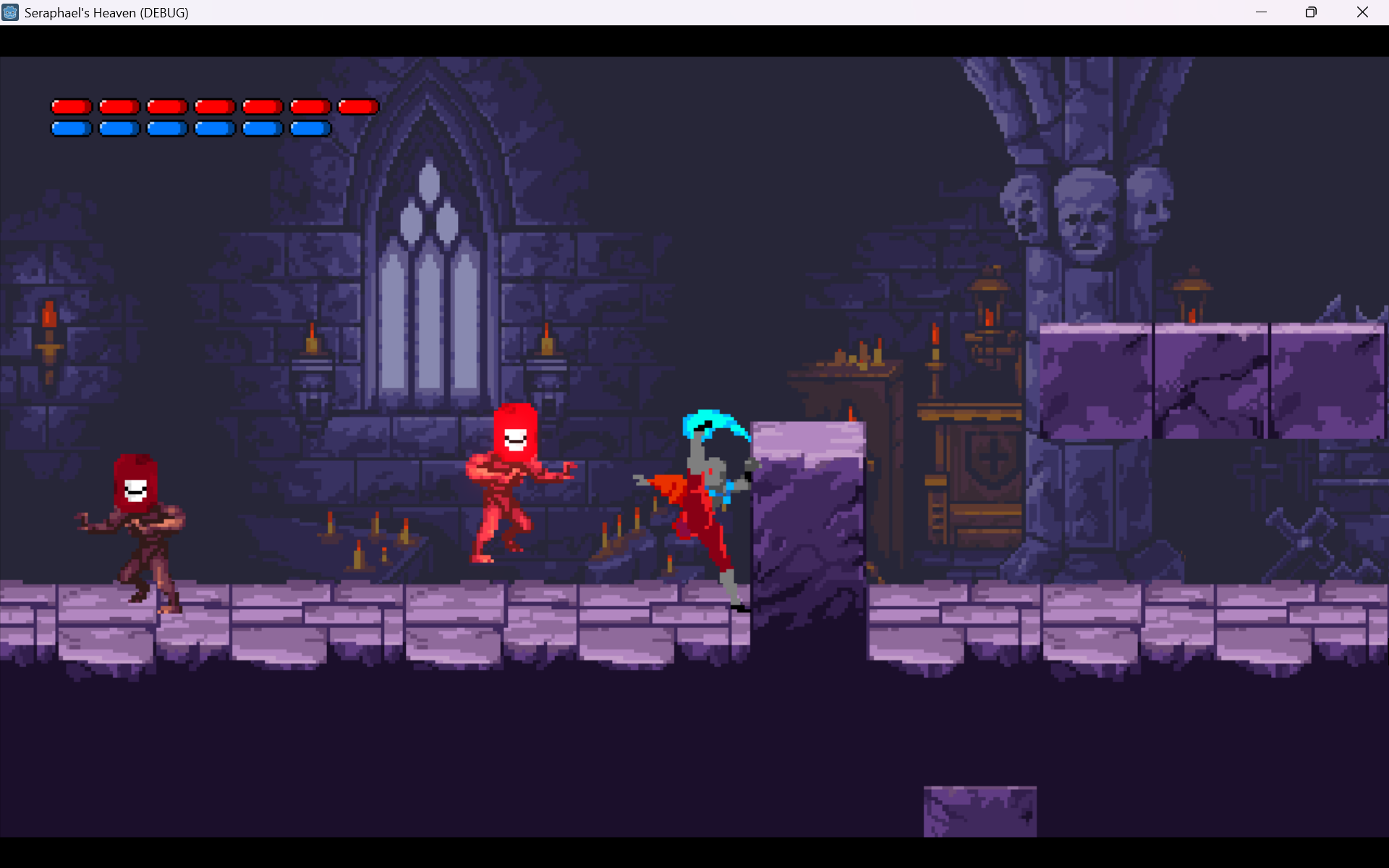
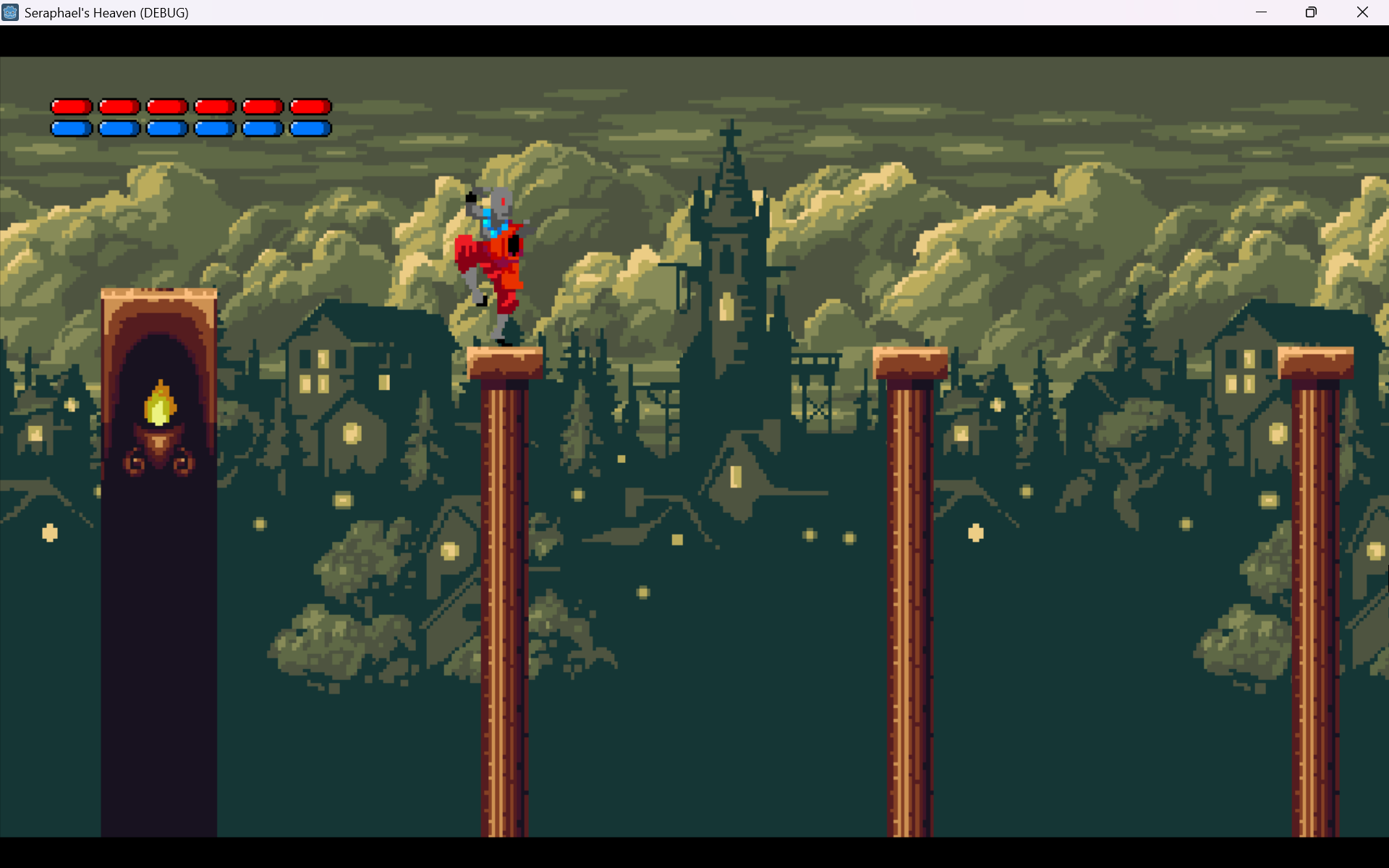
Gameplay itself follows a traditional stage-based structure. Each level is self-contained, featuring straightforward enemy placement, hazards, and platforming sections that demand timing more than improvisation. Movement is intentionally stiff, attacks are limited in variety, and failure is expected. Checkpoints are sparse, and repetition is part of the intended experience.
Where the game diverges slightly is in its boss encounters. While the stages remain grounded in classic action-platforming, boss fights shift toward a more pattern-heavy, reaction-based format. These encounters emphasize reading enemy behavior, dodging attacks in confined spaces, and surviving extended sequences rather than simply dealing damage as quickly as possible. They are not complex by modern standards, but they require attention and patience in a way the regular stages do not.
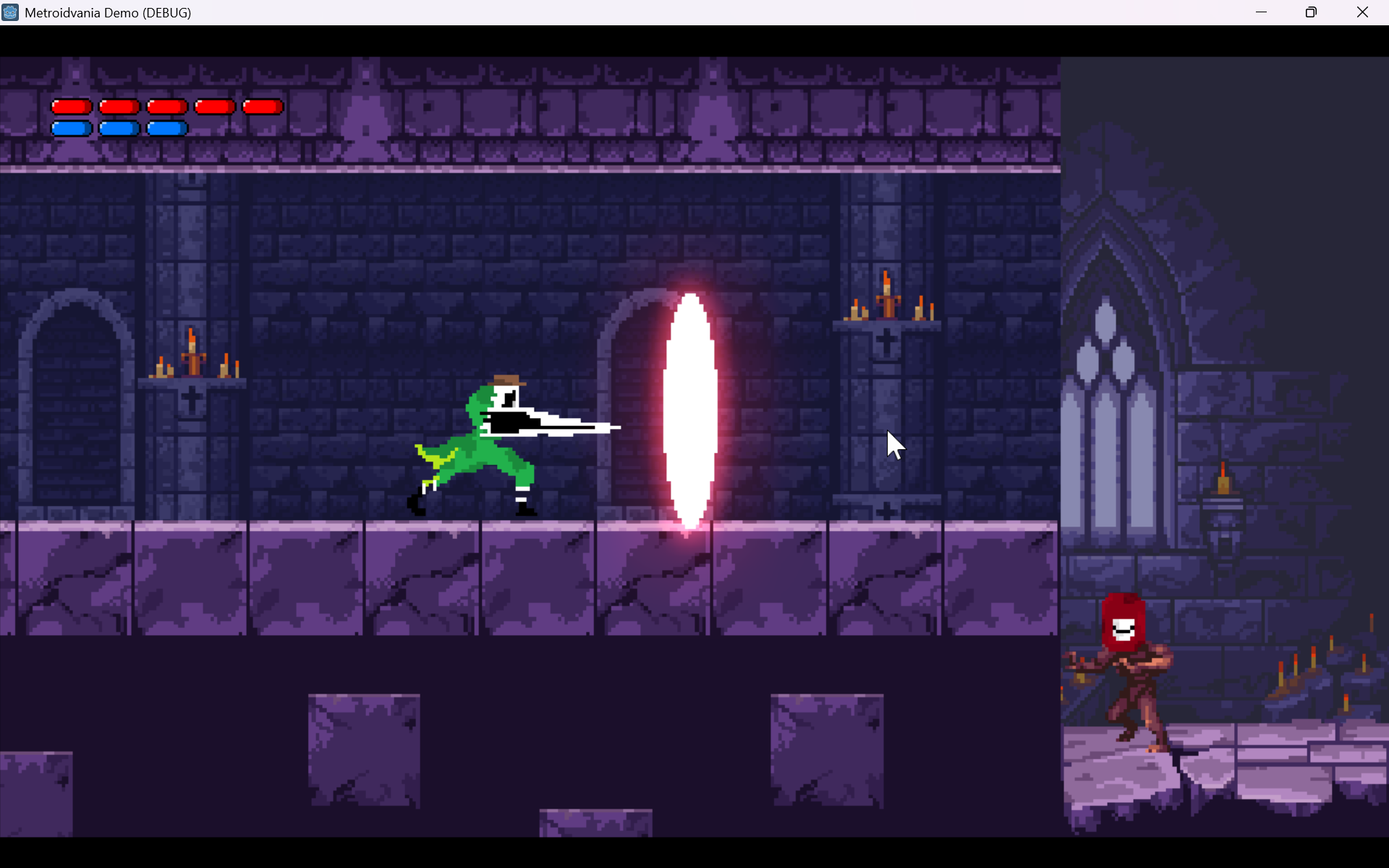
There are multiple playable characters, each with minor differences in how they handle combat or movement. These differences are not extensive enough to redefine the game, but they offer some variation in how stages can be approached. The overall structure remains the same regardless of who is chosen.
Visually, the game uses simple pixel-based presentation. Animation is limited, environments are repetitive, and visual clarity is prioritized over detail. There are no advanced effects, no dynamic systems, and no attempt to create a cinematic experience. Sound design follows a similar philosophy: functional, minimal, and consistent with the tone, but not expansive.
Seraphael’s Heaven is not designed to appeal to everyone. It does not aim to innovate, and it does not hide its limitations. Players looking for depth, polish, or modern design sensibilities are unlikely to find them here. However, those willing to engage with a slower, more rigid style of gameplay, and accept its rough edges, may find some value in its straightforward execution and its central conflict.
It is, at its core, a game about opposition: faith versus control, patience versus action, and the consequences of believing too strongly in one’s own righteousness. Whether that premise carries the experience will depend entirely on how much the player is willing to meet it on its own terms.
Download
Development log
- DEMO RELEASE6 days ago
Comments
Log in with itch.io to leave a comment.
you are really gifted! I am proud of you!